農業において耐雨性アジュバントが重要な理由
本記事では、当社の技術専門家であるアプリケーションチームリーダーの Ryan McDonaldと、研究技術スペシャリストの Sean Rouseが、耐雨性アジュバントとは何か、そしてなぜ農薬業界で重要であるのかを解説します。
農業を取り巻く環境は常に変化しており、食料および再生可能資源への需要の増加に加えて、予測困難な気象パターンの影響もあり、高性能かつ耐候性の高い製剤が求められています。また、規制の厳格化により、処方技術者が利用できる選択肢は限られつつあります。
これらの課題が交差する重要な要因の一つが「降雨」です。降雨は、散布直後の除草剤、殺菌剤、殺虫剤を洗い流してしまい、効果が発揮される前に失われる可能性があります。この影響を軽減する重要な手段が「耐雨性添加剤(rainfastness additives)」です。

耐雨性とは、作物保護製品が降雨や灌水後も性能を維持する能力を指します。特に降雨頻度が高い地域や湿度の高い環境では、散布タイミングを天候に合わせることが難しいため重要です。
耐雨性を高めることで、以下の利点があります
- 作物の健全性維持
- コスト削減
- 排出削減
- 環境負荷低減
- 有効成分の無駄削減
- 再散布回数の低減
- 水系などへの流出の抑制
耐雨性アジュバントは、さまざまな作用機構(MoA)により降雨時でも農薬の効果を維持する成分です。
主な役割
- 葉面への付着性の向上
- 広がり(スプレッディング)の改善
選択は有効成分の特性に大きく依存します。
例えば
- 接触型農薬 → 葉面に留まる必要あり
- 浸透型除草剤 → 葉内部に浸透する必要あり
主な種類
- スーパー展着剤(Super-spreaders)
- 吸収促進剤(Uptake enhancers)
- 固着剤ステッカー(Stickers)
スーパー展着剤
トリシロキサン系アジュバントは、高い濡れ性により葉面全体に均一に広がり、乾燥を促進します。
しかし注意点
- 乾燥が速すぎる → 有効成分の作用が不十分になる場合あり
- 親水性成分では再溶解しやすく、流亡が増加
- エマルジョンや懸濁液の不安定化の可能性
- 規制の影響もあり、使用見直しが進んでいます。
吸収促進剤
有効成分の葉内部への吸収を促進します。
特徴
- 浸透型農薬に有効
- 吸収後は雨の影響を受けない
ただし
- 接触型には不適
- 有効成分ごとに適合性が必要
固着剤
葉面に耐水性の皮膜を形成します。
特徴
- 幅広い農薬と相性が良い
- 高い耐雨性
課題
- EUのマイクロプラスチック規制対象となる可能性→ 使用削減の動きあり
性能評価
評価方法は大きく2つ:
- スクリーニング試験 o速い・低コスト
- 生物試験 o実環境に近い
流れ:スクリーニング → 温室試験 → 圃場試験
Given the importance of rainfastness performance for delivering efficacy from products, it is important to be able to measure and compare performance across different formulations in a quick and consistent manner. As with additive choice, this will vary with the active and MoA in question.
For uptake enhancement, screening tools like Franz cell studies may be used, while for wetting agents, a combination of physical chemistry tests can be used to characterise spreading, wetting, and drying performance. For the final class, stickers, it is often required to simulate the full application, drying, and rain event sequence to observe relative performance.
Sticker MoAs
Simulating the full rainfastness cycle of a sticker-based formulation at lab scale can take a number of different forms, each with its own strengths and limitations, but this outline will focus on the method Croda uses in internal product performance evaluation screenings.
For this method, the goal is to be as reproducible as possible, and we have therefore made some concessions on real-world authenticity, such as using synthetic substrates instead of leaves, and pipettes to control application rather than sprays. For the lab method of measurement, we use a variety of industry-relevant formulations spanning herbicides, insecticides, and fungicides, and measure their performance with built-in and tank-mix adjuvants.
The formulations are diluted to their standard in-use concentrations as per their label, then a sample is dropped onto a test slide. These are microscope slides that have been coated in a synthetic coating to simulate a hydrophobic leaf surface in a consistently flat and repeatable way. These slides are then left to dry in a temperature and humidity-controlled environment.
The slides are mounted at 45° in a custom rig, with a water outlet mounted above the deposit. A peristaltic pump is used to deliver continuous drops of deionised water directly to the slide above the deposit, which is allowed to run down across the deposit to simulate a rain event.
The deposit is imaged using a USB microscope throughout the test, with one image taken every ten seconds for five minutes. The images are then analysed using custom software that measures the percentage of the deposit remaining in each image (Figure 1).
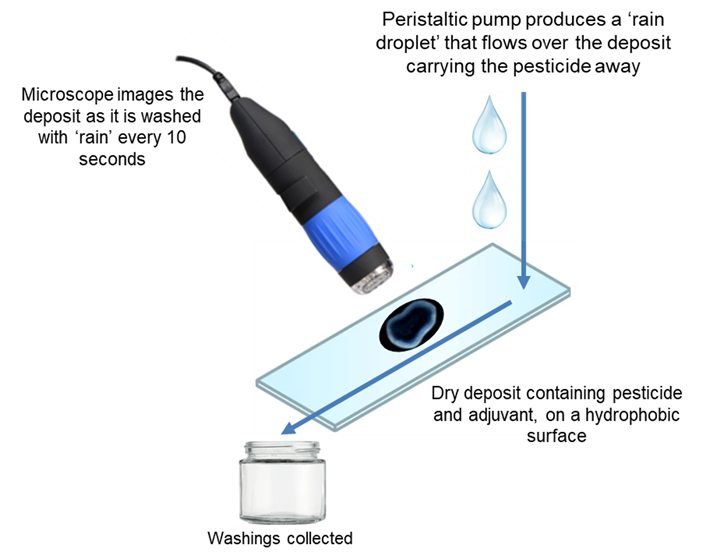
Figure 1: Croda's rainfastness screening method
By plotting the time against the remaining deposit, we can observe the relative rainfastness performance at each time point and compare the properties of different additives and formulations. Figure 2 shows an example of the type of data generated from this, comparing a control (a contact herbicide, phenmedipham) with no rainfastness additive to one with a development rainfastness material.
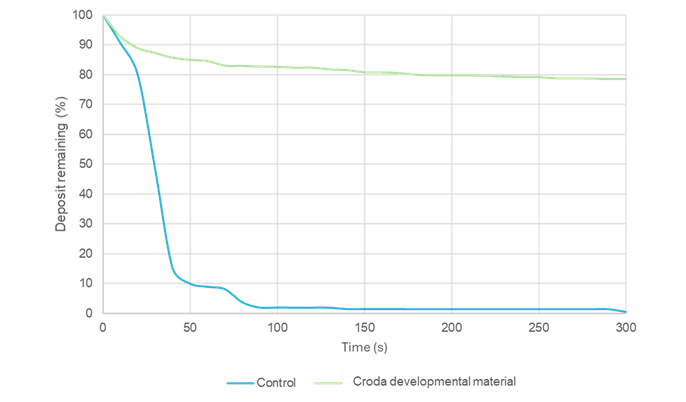
Figure 2: Example of rainfastness data using glass slide screening method
The limitation of this method is that it trades many of the real-world variables for more easily controlled ones in order to boost speed and repeatability. This includes factors such as swapping from leaves to synthetic slides, spray nozzles for a pipette, and variable rain for a more consistent pump.
This allows for excellent consistency but means the test needs to partner with a more authentic one to get a complete picture of product performance. For us, the partner method is one carried out by our glasshouse team; formulations are sprayed using commercial spray equipment onto representative target plant species and the overall formulation efficacy is evaluated directly.
Short of full-scale field trials, direct glasshouse evaluation is one of the best ways of evaluating the performance of any adjuvant, with much easier control of conditions for consistent results. Analysis techniques vary by species and active MoA, but plant weight, visual assessment and/or photosynthetic efficiency measurements are all potential options.
Figure 3 shows data obtained using a terbuthylazine (herbicide) formulation applied to Ipomoea purpurea plants (common morning glory, the same family as bindweed) and evaluated by measuring photosynthetic efficiency. The test compared the same herbicide formulation with and without a developmental rainfastness additive to a treatment with no herbicide.
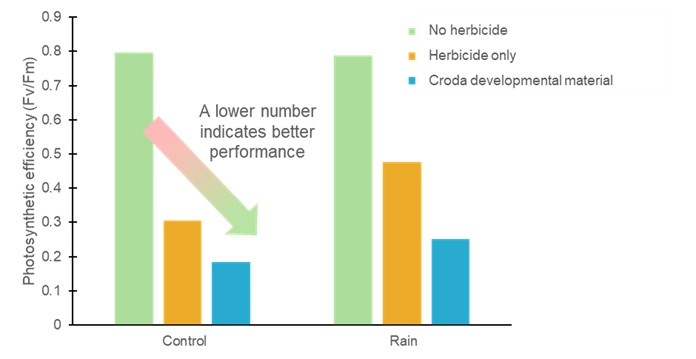
Figure 3: Data generated using glasshouse method comparing performance with & without a rainfastness adjuvant and rain event
The same test protocol was carried out on samples with and without a rain event to compare efficacy. It is important to note that the measurements indicate plant health, so for this herbicide test, a lower bar indicates better performance as less active ingredient has been washed away by the rain event.
Our focus
Using methods like those described, we have been running a programme of study assessing the enhancement of rainfastness across a wide range of actives. Most recently, the upcoming European synthetic polymer microparticle regulations (often referred to as a ‘microplastics ban’) have reduced the available sticker chemistries substantially, resulting in an upcoming unmet need for the industry.
In response to this, a wide variety of chemistries have been evaluated, looking for compliant materials that will still deliver the required performance. These efforts have looked at a range of options, including boosting the biodegradability of existing materials, functionalising film-formers from the existing range, and evaluating materials from other markets that could deliver the right properties to agricultural formulations.
For Croda, the most interesting chemistry being worked on is a class called alkyd resins, a staple in the paints and coatings industry that has so far not seen wide usage in the agricultural industry. The resins are polyesters, which can be 100% biobased, with the typical components being readily available polyols, dicarboxylic acids, and fatty acids. Varying the components and their proportions enables tuning of key polymer physical and chemical properties that affect film formation.
Alkyd chemistry can be delivered as an oil-in-water emulsion system and, therefore be readily included into aqueous systems or added directly to the tank before spraying as a stand-alone adjuvant. This delivery system is then able to provide rain-resistant films to surfaces from aqueous dilutions in a spray tank; thereby affording a solution to the challenge of providing rain-resistance (which often necessitates hydrophobic ingredients) from water-based systems such as suspension concentrates.
This class can be tuned for optimal formulating and rainfastness properties, while being made up of all liquid components to conform to upcoming microparticle legislation.
Conclusion
Rainfastness adjuvants play a vital role in agriculture, helping protect pesticide performance even after rainfall or irrigation. ‘Sticker’ adjuvants are now under increased scrutiny, as upcoming EU microplastic regulations are likely to limit the commercial use of many existing products.
In response, we are intensifying our search for alternative, sustainable technologies that meet regulatory expectations while continuing to deliver market-led innovation.
This article is featured in Speciality Chemicals Magazine Jan/Feb 2026.
Contact us to find out more about rainfastness and our adjuvant portfolio.